When people think about surge damage they picture lightning taking out a television. That happens, but it is rare. The far more common story is the one nobody notices: a steady accumulation of small over-voltage events, each too brief to see, gradually degrading the power supplies inside everything electronic in the house.
The result is appliances that fail early for no apparent reason. LED drivers that last eighteen months. A television that dies at four years. An inverter that never quite performs as it should.
Where surges come from
Only a minority of surges originate outside the building. Most are generated inside it, by the switching of inductive loads — motors, compressors, pumps and transformers. Every time an air conditioner compressor cuts out, or a lift motor stops, or a workshop machine switches off, the collapsing magnetic field pushes a brief voltage spike back onto the supply.
In a dense area — an apartment block, or a mixed residential and workshop street of the kind common in Katargam and Varachha — you are sharing a supply with a great many such loads. The spikes from all of them reach your sockets.
- Motor and compressor switching, inside your home and your neighbours'
- Supply switching and load transfer on the distribution network
- Power restoration after an outage, which is often the worst moment
- Lightning, including strikes some distance away coupling onto lines
- Generator and inverter changeover in buildings with backup supply
Why electronics fail from this and motors do not
A fan motor or a heating element is electrically robust — a brief over-voltage does essentially nothing to it. Electronic power supplies are a different matter. They contain components rated close to normal working voltage, and each spike stresses them a little further.
The damage is cumulative and invisible. Nothing appears to happen at the time. Then one day the device simply does not switch on, and the failure gets attributed to bad luck or poor manufacturing rather than to years of accumulated electrical stress.
This is why cheap LED fittings fail early
If several LED lights in the same building have failed within a year or two, supply quality is a more likely explanation than a bad batch. Drivers with a narrow input voltage range have very little margin to absorb what a real supply delivers.
A stabiliser is not a surge protector
This confusion is extremely common and it costs people money. A voltage stabiliser corrects sustained deviations — supply sitting at 190V or 260V for minutes or hours. It works by switching transformer taps, which takes time measured in tens of milliseconds.
A surge lasts microseconds. It is over thousands of times faster than a stabiliser can respond. The stabiliser passes it straight through to whatever is plugged in behind it.
Both devices are useful and they address different problems. If your supply voltage wanders, you want a stabiliser. If you want to protect electronics from spikes, you want a surge protection device. Having one does not give you the other.
How proper surge protection is arranged
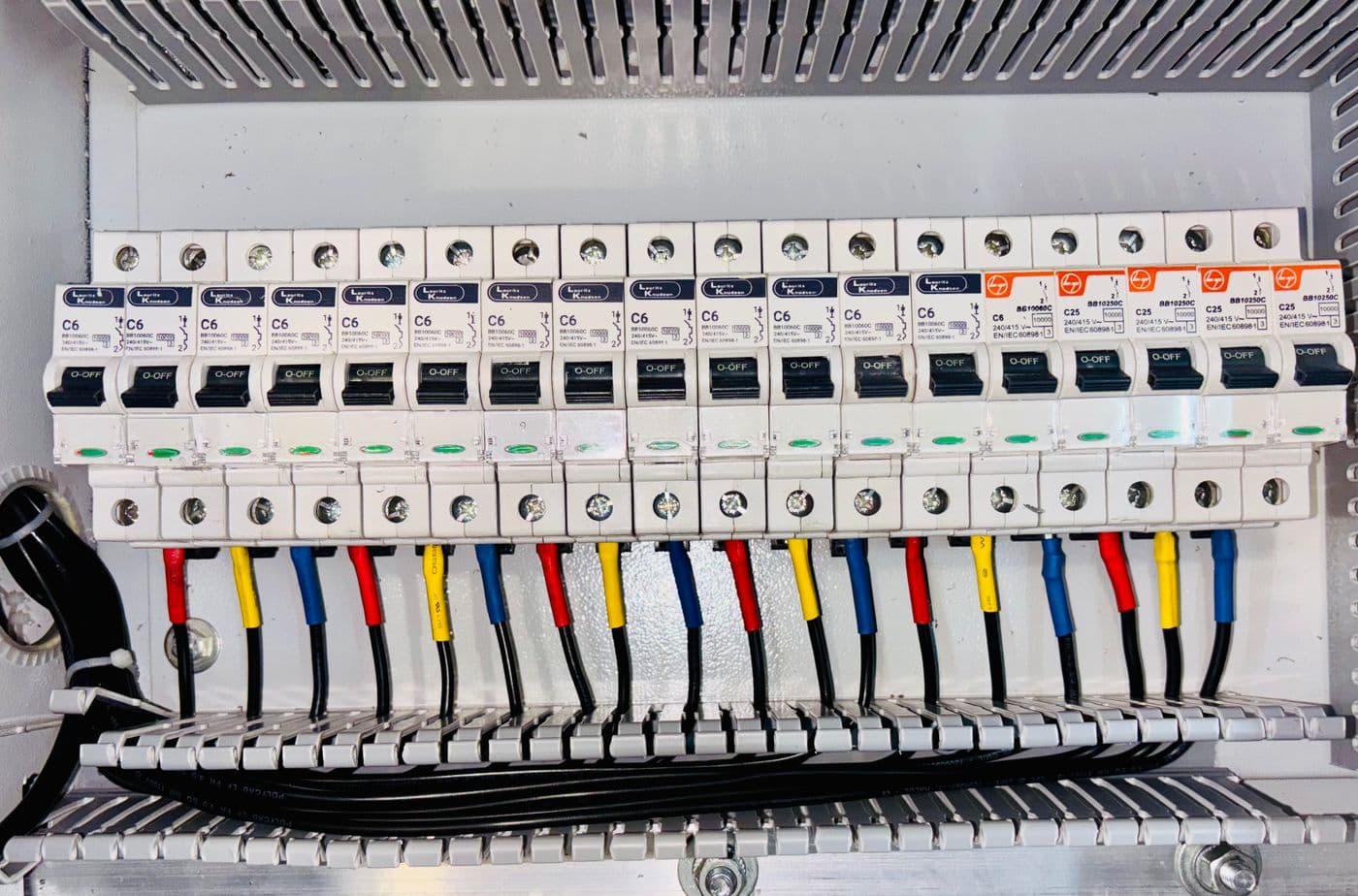
Effective protection is layered. A Type 2 surge protection device installed at the distribution board handles the large incoming energy and clamps it to a level the rest of the installation can tolerate. It is a compact device that mounts on the DIN rail alongside your MCBs.
Point-of-use protection then deals with what remains, and with surges generated inside the building downstream of the board. This is where a decent surge-protected extension for the television or computer earns its place — but only as a second layer, not as the whole strategy.
- Board-level SPD: the foundation, handles the large events
- Point-of-use protection: for expensive or sensitive equipment
- Good earthing: an SPD diverts surge energy to earth and cannot work without a sound earth path
- Replace point-of-use protectors periodically — they degrade with each event absorbed
The earthing point deserves emphasis. A surge protection device works by diverting energy away to earth. If the earth arrangement is inadequate or corroded — which is common in older properties — the SPD has nowhere to send that energy and cannot do its job.
Is it worth it?
Add up what is plugged in around a modern home: television, computers, router, inverter, refrigerator electronics, washing machine controller, air conditioner PCBs, LED drivers throughout the house. The total is substantial, and every item on that list has an electronic power supply vulnerable to what we have described.
Against that, a board-level SPD is a modest cost fitted in an hour. It is one of the more straightforward value calculations in domestic electrical work, and it is particularly worth doing in areas with frequent supply interruptions — restoration after an outage is one of the commonest surge events there is.
Related service
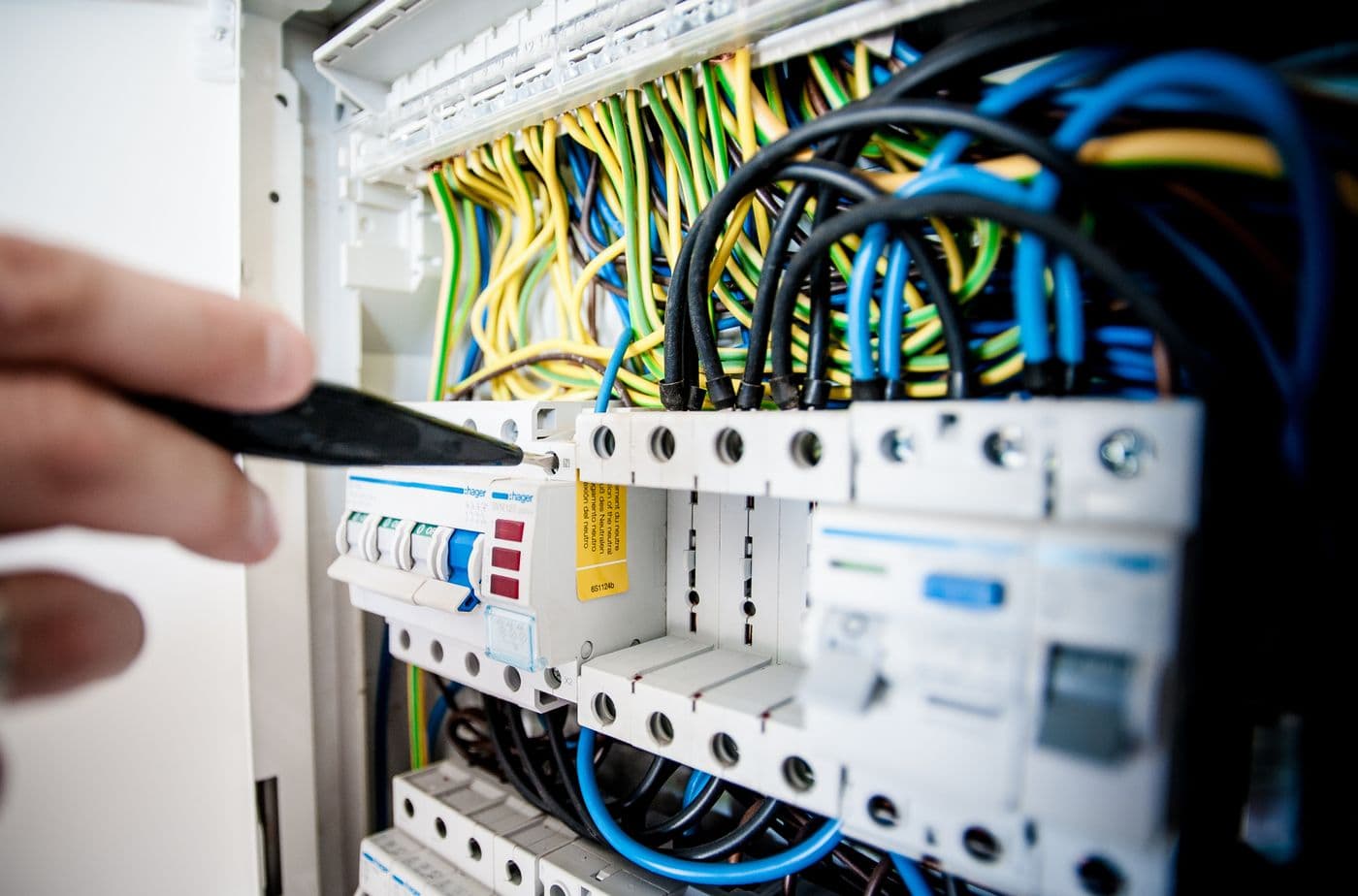
MCB Repair & Replacement
Board upgrades including surge protection and proper earthing, across Pal, Adajan and Surat.
Quick answers
Is a voltage stabiliser enough to protect my appliances?
No. A stabiliser corrects sustained voltage deviations over tens of milliseconds; a surge lasts microseconds and passes straight through. They solve different problems and you may want both.
Where should a surge protection device be installed?
At the distribution board, on the DIN rail alongside the MCBs. It needs a sound earth connection to work, so the earthing arrangement should be checked at the same time.