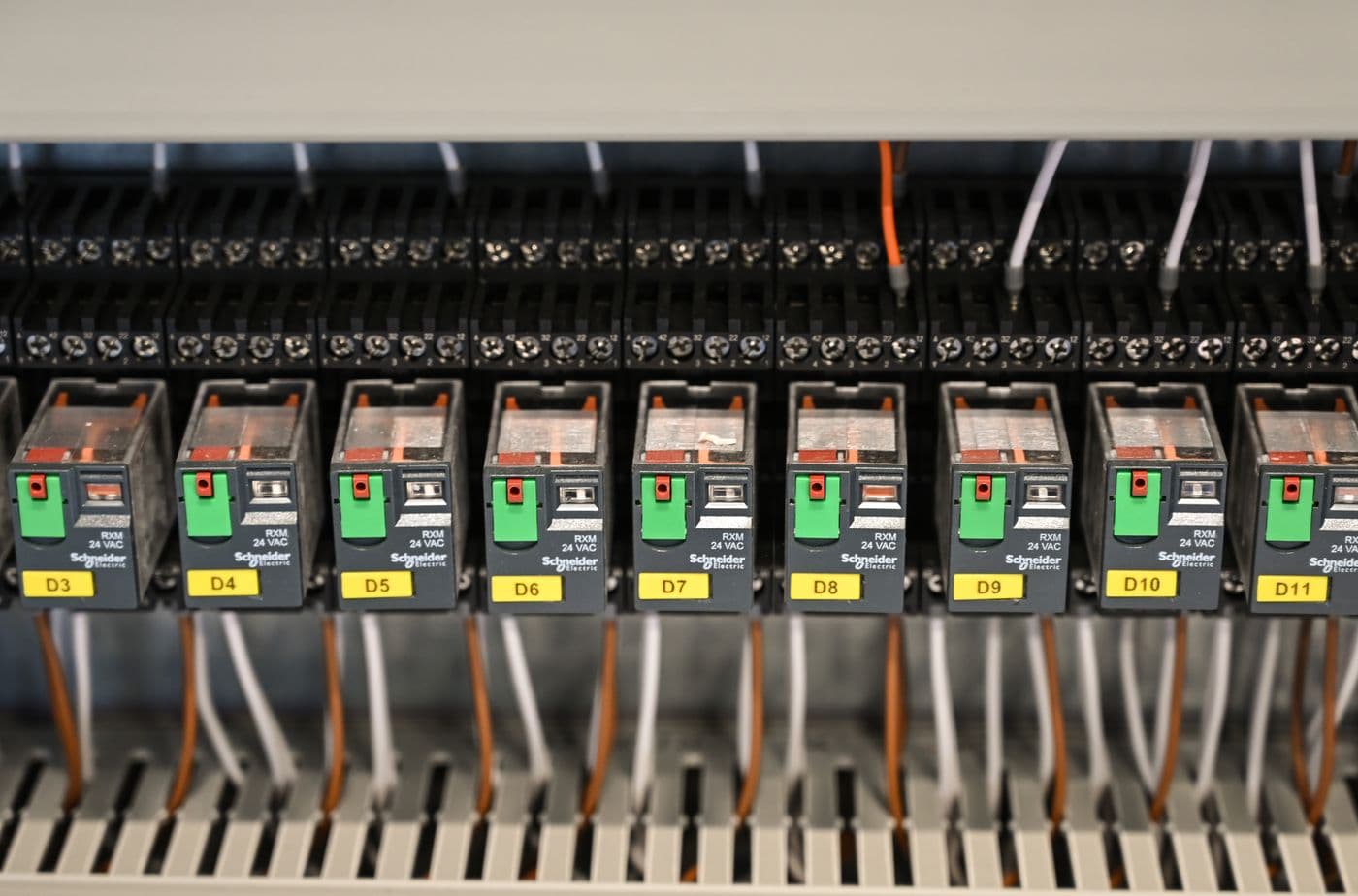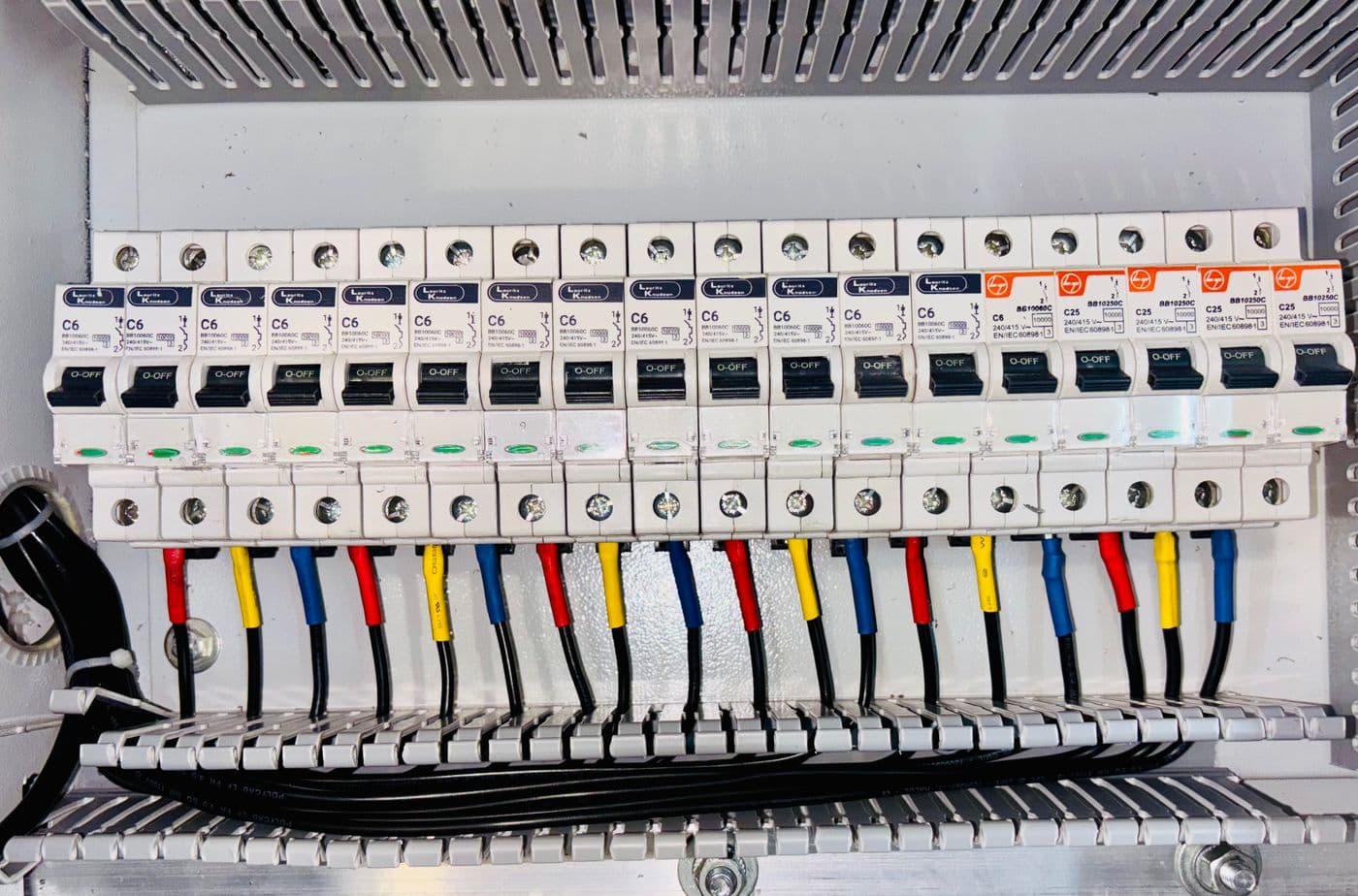
Open a modern distribution board and you will see two kinds of device sitting side by side on the rail. They look broadly similar, they both switch, and both of them trip. They are protecting entirely different things.
Getting this distinction clear is worth a few minutes, because it explains why some faults black out one room and others black out the whole flat — and because it tells you whether your board is actually protecting the people in your home.
What an MCB does
A Miniature Circuit Breaker watches the amount of current flowing through a circuit. If that current exceeds the breaker's rating for long enough, or spikes enormously in an instant, it disconnects.
The thing it is protecting is the cable. Copper carrying more current than it is sized for gets hot, and hot cable inside a wall or a conduit is how electrical fires start. The MCB rating is chosen to match the cable, which is exactly why fitting a larger one to stop nuisance tripping is so dangerous.
- Protects against overload — sustained current above the rating
- Protects against short circuit — a sudden, very large current
- Rated to the cable it protects, typically 6A, 10A, 16A, 20A or 32A in homes
- Trips at currents far too high to be survivable by a person
What an RCCB does
A Residual Current Circuit Breaker compares the current going out on the live conductor with the current returning on the neutral. In a healthy circuit those are equal. If they differ, current is leaving the circuit somewhere else — through damaged insulation, through damp masonry, or through a person.
A domestic RCCB typically trips at a difference of 30 milliamps, which is a tiny fraction of what an MCB responds to. That number is not arbitrary: it is set below the level at which current through the human body becomes lethal, and it trips in well under a tenth of a second.
This is the device that saves lives
An MCB will happily let 30 milliamps flow through a person indefinitely — that current is nowhere near enough to trouble a 16A breaker. Only an RCCB sees it. If your board does not have one, nothing in your installation is protecting you from a shock.
Why you need both
Neither device can do the other's job. An RCCB does not measure how much current a circuit is carrying, so it will not protect a cable from overload. An MCB does not compare live and neutral, so it cannot see leakage to earth. A properly protected installation has both, working together.
You will also see RCBOs, which combine both functions in a single device covering one circuit. They cost more but they are the tidiest arrangement: a fault on one circuit trips only that circuit, rather than taking the whole flat down.
How the board should be arranged
- An isolator or main switch to disconnect the whole installation
- RCCB protection split across circuit groups, not one covering everything
- An individual MCB on each final circuit, rated to that circuit's cable
- Bathroom, kitchen, outdoor and socket circuits all behind earth leakage protection
- Every way clearly labelled by room and function
How to check what you have
You can do this yourself in a minute. Look at the board: an RCCB is usually wider than the MCBs beside it, and it has a small test button marked T or TEST. If nothing on your board has a test button, you almost certainly have no earth leakage protection.
If you do have one, press the test button. It should trip instantly and firmly. If it hesitates, or does nothing at all, the device has failed and needs replacing — a non-functioning RCCB is arguably worse than none, because you believe you are protected.
Worth doing every few months. It takes ten seconds, and it is the only way to know that the protection is still live.
Common problems with RCCB installations
The complaint we hear most is that the RCCB is a nuisance because the whole house goes dark when a bathroom light fails. That is a real problem, but the fault is the arrangement, not the device: a single RCCB covering an entire installation means every small leakage anywhere takes everything down.
Splitting protection across two or more RCCBs, or moving to RCBOs on individual circuits, fixes this properly. What should never happen — and what we do occasionally find — is somebody bypassing the RCCB to stop the tripping. That removes the only device in the board that is protecting people.
Safety first
If your RCCB does not trip when you press its test button, treat it as failed and have it replaced. Until then, be aware that your installation has no earth leakage protection.

Related service
MCB Repair & Replacement
Board upgrades with properly split RCCB protection, across Pal, Adajan and all of Surat.
Quick answers
Do I need an RCCB if my house has good earthing?
Yes. Earthing gives fault current a path away from you; an RCCB detects that current and disconnects the supply. They work together, and earthing alone does not disconnect anything.
Why does my RCCB trip and take the whole flat down?
Because one RCCB is covering every circuit. Splitting protection across two devices, or using RCBOs per circuit, means a fault in one place no longer blacks out everything.