Two mistakes cost people money in opposite directions. One is calling out an emergency electrician at midnight for something that would have been half the price on Tuesday morning. The other is living with a warning sign for six months until it becomes a genuine emergency.
This is a straightforward sorting of which is which.
Call immediately — do not wait for morning
These indicate a fault that is actively dangerous. In each case, isolate the affected circuit or the main supply first, then call.
- Burning smell, hot plastic smell or smoke from a board, socket, switch or fitting
- Visible sparking, arcing or scorch marks anywhere in the installation
- Any shock or tingle from a switch, socket, tap, appliance casing or metal fitting
- A breaker that trips instantly and violently every time it is reset
- Water that has reached a distribution board, socket or fitting
- A fitting, socket or board that is hot to touch
- Exposed conductors after any damage — drilling, an impact, a fallen fitting
The smell is the important one
A hot-plastic or fishy smell near electrical equipment is overheating insulation. That is the stage immediately before a fire, and it is the single most under-reacted-to sign in domestic electrics.
Call within a day or two
Not emergencies, but not things to leave either. Each of these is a fault that will get worse and is cheaper to fix now.
- A socket or switch plate that is warm, or discoloured around the pin holes
- A breaker that has started tripping repeatedly when it did not before
- Lights that flicker or dim noticeably when other appliances switch on
- A socket that works intermittently, or only when the plug is held at an angle
- Buzzing or crackling from a switch, socket or the board
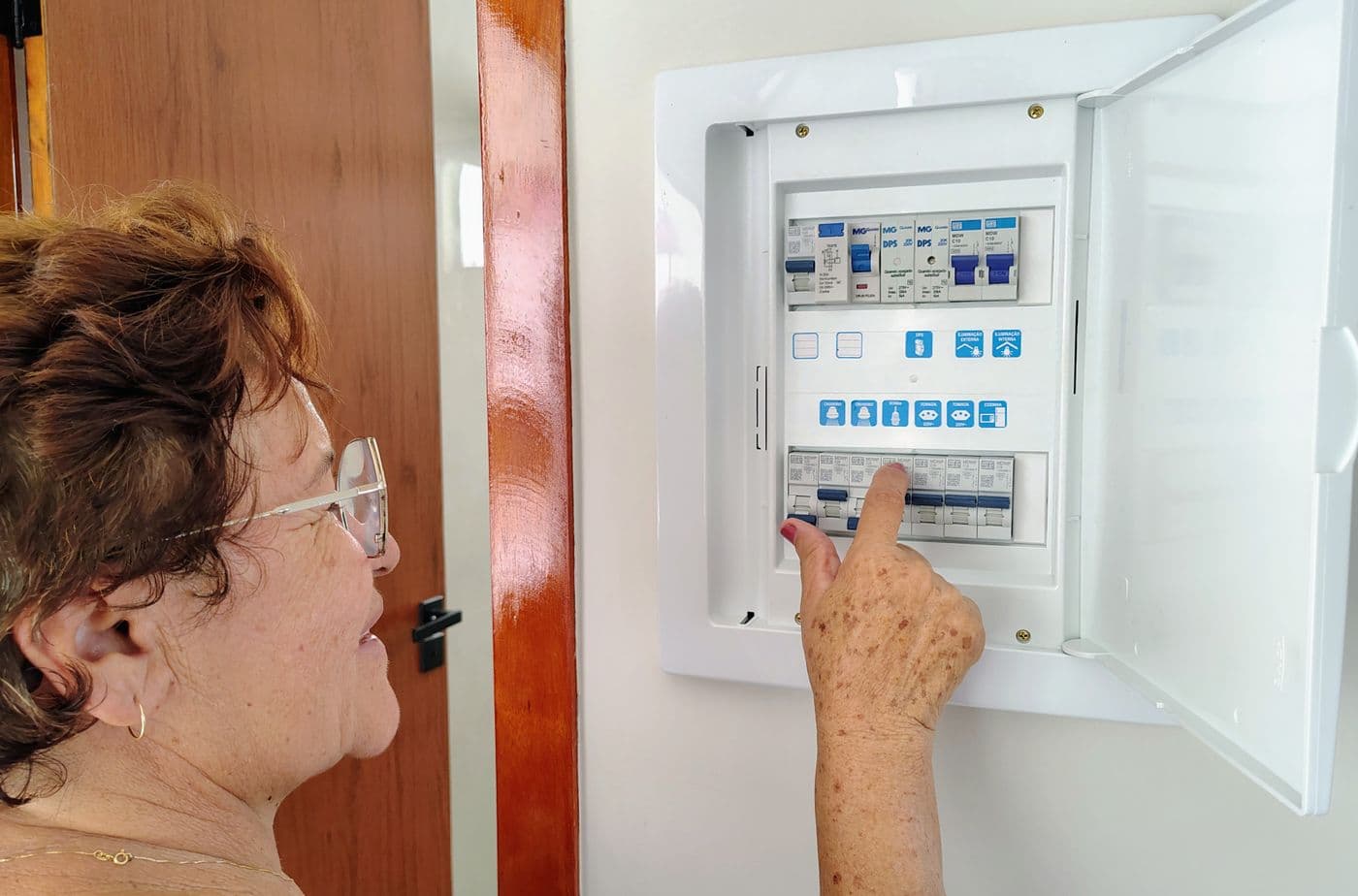
- An RCCB that does not trip when you press its test button
- A ceiling fan that has developed a wobble it did not have before
Book a scheduled visit
Genuine work, no urgency. Grouping several of these into one visit costs considerably less than calling someone out for each.
- A dead socket or light point that has been dead for a while
- Fans that have slowed down or become noisy
- New points, additional circuits or extra lighting
- Replacing switches and sockets, or converting to modular
- Fitting new lights, fans or a chandelier
- Annual maintenance and safety inspection
- Board upgrades and adding RCCB protection where there is none
It is worth keeping a running list. Most households accumulate four or five small jobs over a year, and having them all done in one visit is significantly cheaper than four separate call-outs.
Probably not your electrician's job
Two situations regularly result in an unnecessary call-out, and both are easy to check first.
The whole building or street is dark
If your neighbours have no power either, the fault is on the supply side and it belongs to DGVCL rather than to your internal wiring. Look out of the window before calling anyone. A good electrician will tell you this rather than charging for the visit.
One appliance is faulty
If a single appliance trips the board and everything is fine without it, the fault is in the appliance. An electrician can confirm that quickly, but the repair itself is a job for whoever services that appliance.
What to have ready when you call
Five minutes of preparation makes a real difference to how quickly the problem gets solved, because it determines what the electrician brings.
- 1What exactly is not working — one point, one room, one floor, or everything
- 2Whether the breaker is down, and if so which one and at what level
- 3Whether there is any smell, noise, heat or visible damage
- 4When it started and whether anything changed just before — rain, new appliance, drilling
- 5Whether it is constant or intermittent, and if intermittent, when it tends to happen
- 6Your area and any access constraints — lift out of order, gate closed after a certain hour
Safety first
If in doubt, isolate and call. The cost of an unnecessary call-out is a known, modest number. The cost of leaving an overheating connection overnight is not.
Related service
Emergency Electrician
24/7 emergency line for genuine electrical faults, and scheduled slots for everything else.
Quick answers
The whole building has no power. Should I call an electrician?
Check with a neighbour first. If the outage covers the building or street, it is a supply issue for DGVCL rather than your internal wiring, and an electrician cannot help.
Is a warm socket really urgent?
It should be looked at within a day or two rather than left. Heat at a connection is the mechanism behind most domestic electrical fires, and it does not improve on its own.