Rewiring is expensive and disruptive, so nobody does it without reason. The difficulty is that electrical deterioration is largely invisible — the parts that age are inside walls and behind faceplates, and the installation carries on working right up until it does not.
What follows are the signs that actually indicate a problem, as opposed to the ones that merely indicate age. An installation can be thirty years old and perfectly serviceable; another can be fifteen and genuinely unsafe.
1. Insulation that cracks when disturbed
This is the definitive sign. Cable insulation from earlier decades goes hard with age and heat, and eventually cracks or flakes away when the conductor is moved. An electrician changing a socket in your home will notice this immediately.
It matters because it does not stay local. If the insulation at the accessible ends of a run has gone brittle, the cable inside the wall is in similar condition. At that point every alteration risks creating a fault, and the installation is on borrowed time.
2. Unearthed two-pin points
A two-pin socket has no earth connection, which means any appliance plugged into it has no path for fault current except through whoever is touching it. In an installation full of them, the wiring predates modern expectations entirely.
Sometimes what looks like a three-pin point turns out to have no earth conductor actually connected behind it, which is worse — the appearance of protection without the substance. It is one of the more common things we find during inspections.
3. Aluminium conductors
Aluminium wiring was used widely for a period because it was cheaper than copper. It is a poorer conductor, it creeps under the pressure of a terminal screw and works loose, and it oxidises to form a resistive layer at connections.
Aluminium installations need connections checked far more often than copper ones, and where the load has grown they are frequently undersized for what they now carry. Replacement is generally the right answer rather than ongoing management.
4. Warm faceplates and discoloured sockets
A socket or switch that is warm to touch, or has brown staining around the pin holes, has a resistive connection behind it that is generating heat. Sometimes that is a single loose terminal. In an older installation it is often a symptom of a wider condition.
Do not wait on this one
Heat at a connection is the direct mechanism behind most domestic electrical fires. A warm or discoloured point should be taken out of use and checked promptly, whatever the age of the installation.
5. A board that has run out of everything
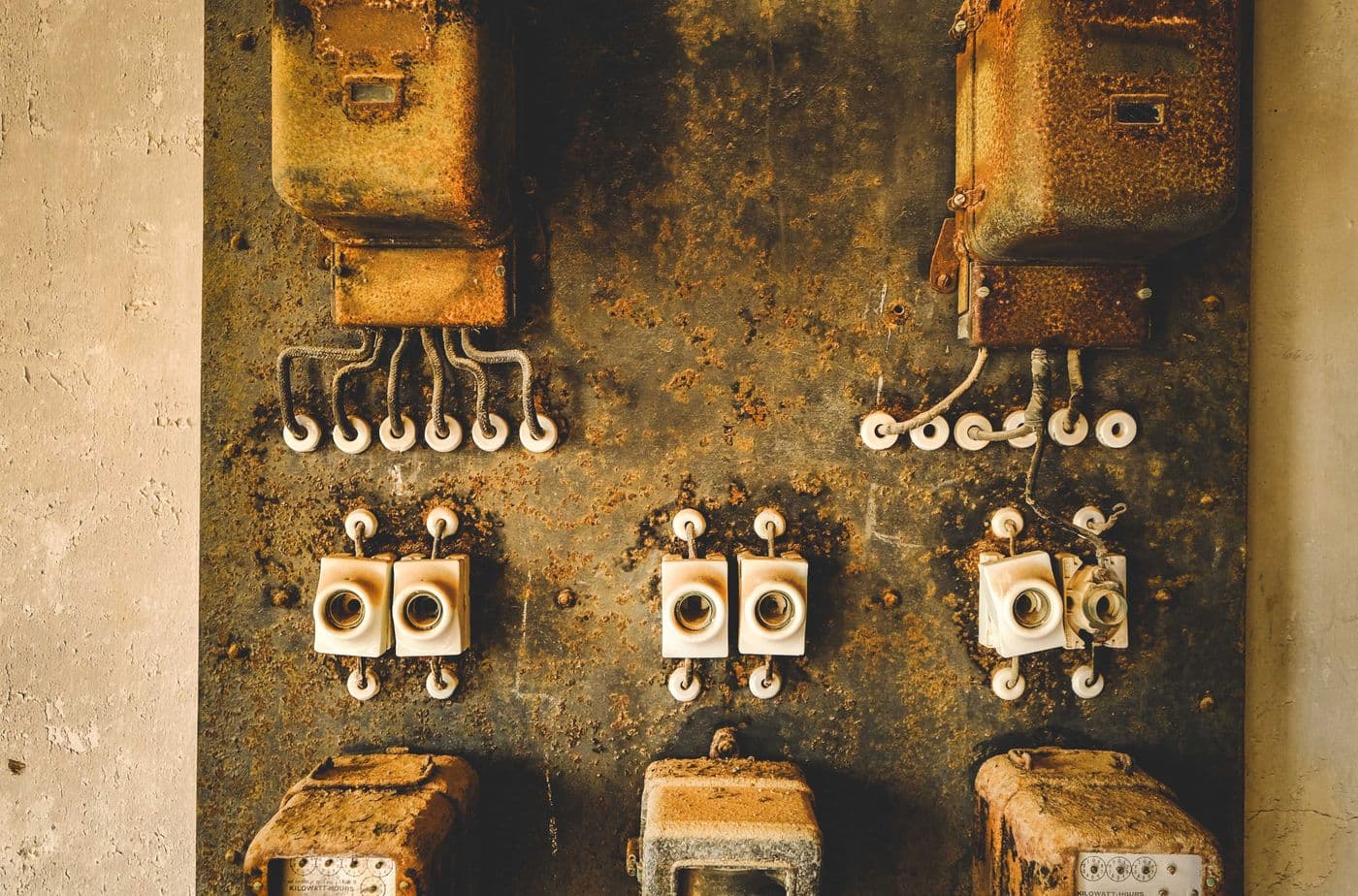
Rewirable fuses. No RCCB. Every way in use with no spare. Multiple conductors doubled up under a single terminal. Circuits nobody can identify. A board in this condition is not merely old — it is a sign that the installation has been extended repeatedly beyond its original design.
A board upgrade on its own is sometimes enough, and it is always worth doing. But if the board has been overloaded for years, the circuits behind it usually have been too.
6. Tripping that has become normal
There is a point at which a household stops treating tripping as a fault and starts treating it as a routine: everyone knows not to run the geyser and the iron together, and somebody goes to the board when the lights go out.
That accommodation is worth noticing. It means the installation has been operating beyond its capacity long enough for the family to have adapted around it.
7. Extension leads doing permanent jobs
Look behind the furniture. If air conditioners, geysers, microwaves or washing machines are running permanently from extension boards, the installation does not have enough points in the right places for how the home is actually used.
This is fixable without a full rewire in many cases — adding circuits and points where they are needed. But it is a strong indicator that the original design and current reality have diverged a long way.
What to do if several of these apply
Get an inspection before getting a quotation. A quotation tells you what somebody proposes to sell you; an inspection tells you what condition your installation is actually in, which findings are urgent, and which are simply signs of age that can wait.
It is also worth knowing that rewiring does not have to happen all at once. Replacing high-load circuits and the board first, and leaving sound lighting runs until later, addresses the real risk while spreading the cost and disruption. We recommend that staged approach often, particularly in older properties around City Light, Athwa and Nanpura.
Safety first
If you have ever felt a shock or tingle from a switch, tap, geyser or appliance casing, treat that as urgent regardless of anything else on this list. It indicates an earthing fault and it should be checked the same day.
Related service
Electrical Wiring
Full and staged rewiring across Surat, planned so you are never left without power overnight.
Quick answers
How long does house wiring last?
There is no fixed lifespan — condition matters more than age. Well-installed copper wiring in a dry, moderately loaded property can last decades, while a poorly installed or heavily overloaded installation can be in trouble within fifteen years.
Can I rewire one room at a time?
Yes, and a staged approach is often sensible. Replace high-load circuits and the distribution board first, then work through the rest as budget and convenience allow.