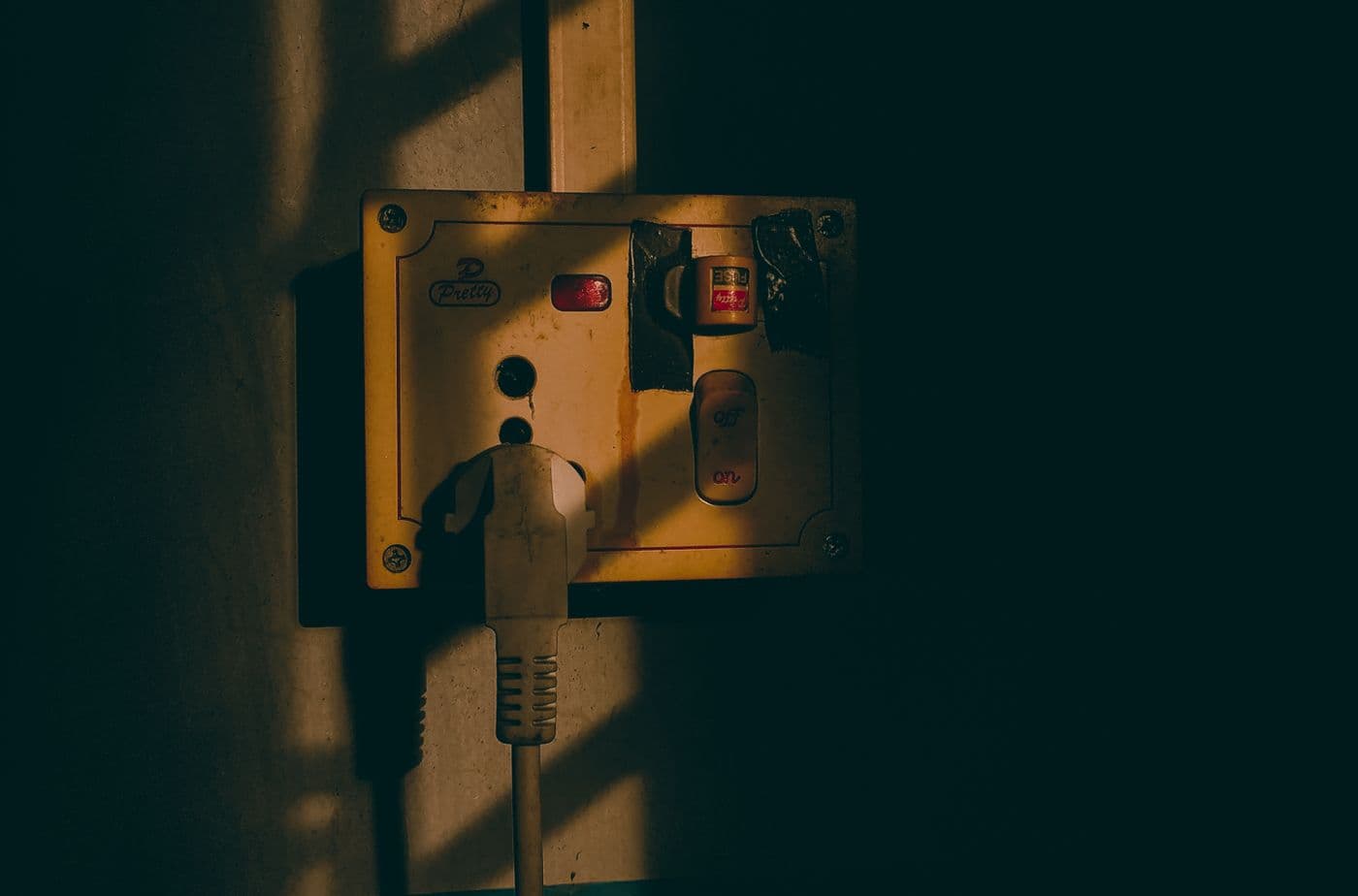
Sockets and switches are the only part of an electrical installation people physically operate, thousands of times a year. Unsurprisingly, they are also where most visible faults appear.
The good news is that most of these faults are inexpensive to put right. The less good news is that several of them are early-stage versions of something serious, and the difference is not always obvious.
The plug falls out or sits loose
The metal contacts inside a socket are sprung to grip the pins of a plug. Thousands of insertions eventually leave them splayed and weak, and the plug no longer sits firmly.
The reason this matters is not inconvenience. A loose contact means the connection is intermittent, and an intermittent connection under load arcs. Arcing generates heat inside the socket where nothing shows from outside, and it degrades the contacts further. A socket that no longer grips should be replaced rather than tolerated.
The faceplate is warm or discoloured
Brown or yellow staining around a pin hole, or a plate that is noticeably warm, means a resistive connection behind it is generating heat. That connection is either a loose terminal in the back box or worn contacts inside the fitting.
This one is not cosmetic
Heat at a connection is the direct mechanism behind most domestic electrical fires. Stop using that point and have it looked at within a day or two.
A switch sparks, buzzes or crackles
A very small flash as a switch operates under load is normal — that is the contacts breaking a circuit. A visible spark, an audible crackle, or a buzz while the switch is on is not.
Buzzing usually means a worn or partially closed contact. On a fan regulator or a dimmer it can also mean the device is failing, or that it is unsuited to the load connected to it — a dimmer running non-dimmable LED fittings will often buzz.
One socket is dead and the others work
This is the most common single complaint, and the most commonly misdiagnosed. People assume the socket has failed. Usually it has not.
Far more often the cause is a loose line or neutral conductor, either in that point's back box or at the point that feeds it. Occasionally it is a break further back in the run. In all of those cases, replacing the socket achieves nothing — which is why testing before swapping matters.
- Loose conductor in that back box — the most common cause
- Loose conductor at the previous point on the same circuit
- A break in the cable run, often from past drilling or civil work
- Failed contacts inside the fitting itself — less common than assumed
- Occasionally an MCB or RCCB that has tripped without anyone noticing
A shock or tingle from a plate
Treat this as urgent. A tingle from a switch or socket plate — particularly a metal one — indicates an earthing fault or a live conductor touching something it should not.
Isolate that circuit at the board and do not use it until it has been checked. This is one of the few genuinely dangerous faults on this page, and it also strongly suggests the installation should be inspected more broadly rather than just at that point.
The plate is cracked or does not sit flush
Cosmetically annoying, and worth attending to because a cracked plate no longer encloses the connections behind it. A plate that will not sit flush usually means the back box is too shallow or too crowded for what has been terminated into it.
That crowding is itself a problem: conductors forced into a box that is too small get their insulation damaged by the edges of the box and by the fixing screws. Deepening the box is the correct fix rather than forcing the plate on.
What is worth upgrading rather than repairing
Some fittings are past sensible repair. Unearthed two-pin points should be replaced with earthed sockets, not repaired. Old switches with hardened, discoloured bodies are due for replacement whether or not they currently work. Any fitting that has visibly overheated should be replaced along with an inspection of the connection that caused it.
If you are replacing several in a room, doing the whole room at once is worth considering — it costs little more in labour, the plates match, and it lets whoever is doing the work check and re-terminate everything behind them in one go.
Safety first
Never remove a switch or socket faceplate without isolating the circuit at the distribution board. A wall switch may interrupt only one conductor, and the fitting can remain live with the switch off.
Related service
Switch & Socket Repair
Dead points, loose sockets, sparking switches and modular upgrades across Pal, Adajan and Surat.
Quick answers
Why is only one socket in my room not working?
Most often a loose line or neutral conductor, either in that socket's back box or at the point feeding it. Replacing the socket without testing usually does not fix it.
Is a small spark when I switch something on normal?
A very brief flash as contacts break a circuit under load is normal. A visible spark, a crackle, or buzzing while the switch is on is not, and should be looked at.